Welcome to the Blog
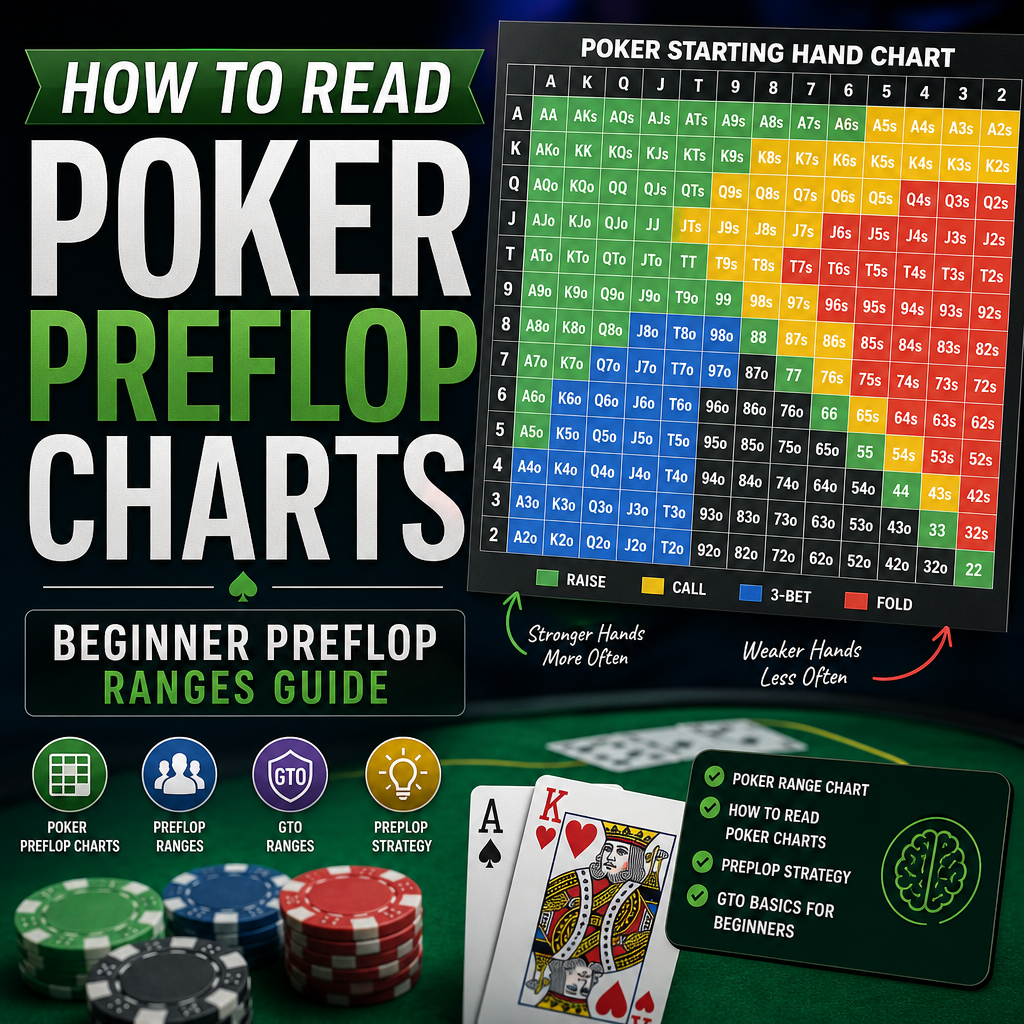
Poker Preflop Charts: Beginner Guide to Preflop Ranges
Poker preflop charts can look confusing at first, but they’re really just a simple map for making smarter decisions before the flop. In this beginner’s guide, you’ll learn how to read poker charts and turn preflop ranges into a clear, practical strategy.

PLO6 Postflop Strategy: PLO Genius Expands Its Study Libraries
PLO Genius is expanding into PLO6 postflop strategy, giving serious players a more structured way to study the game’s most complex decisions. With new postflop trees, custom solving, and PRO access, this update makes six-card Omaha study more practical and effective.

PLO Short-Stack Strategy
Short-stacking PLO is not about playing scared. It is about using stack depth to force simpler, higher-pressure decisions. Pot-Limit Omaha creates many close-equity spots. Players overvalue pretty hands, dominated flush draws, weak wraps, bad aces, and disconnected pairs. A short-stack strategy reduces difficult turn and river decisions while forcing opponents to make expensive mistakes before they fully understand their equity.
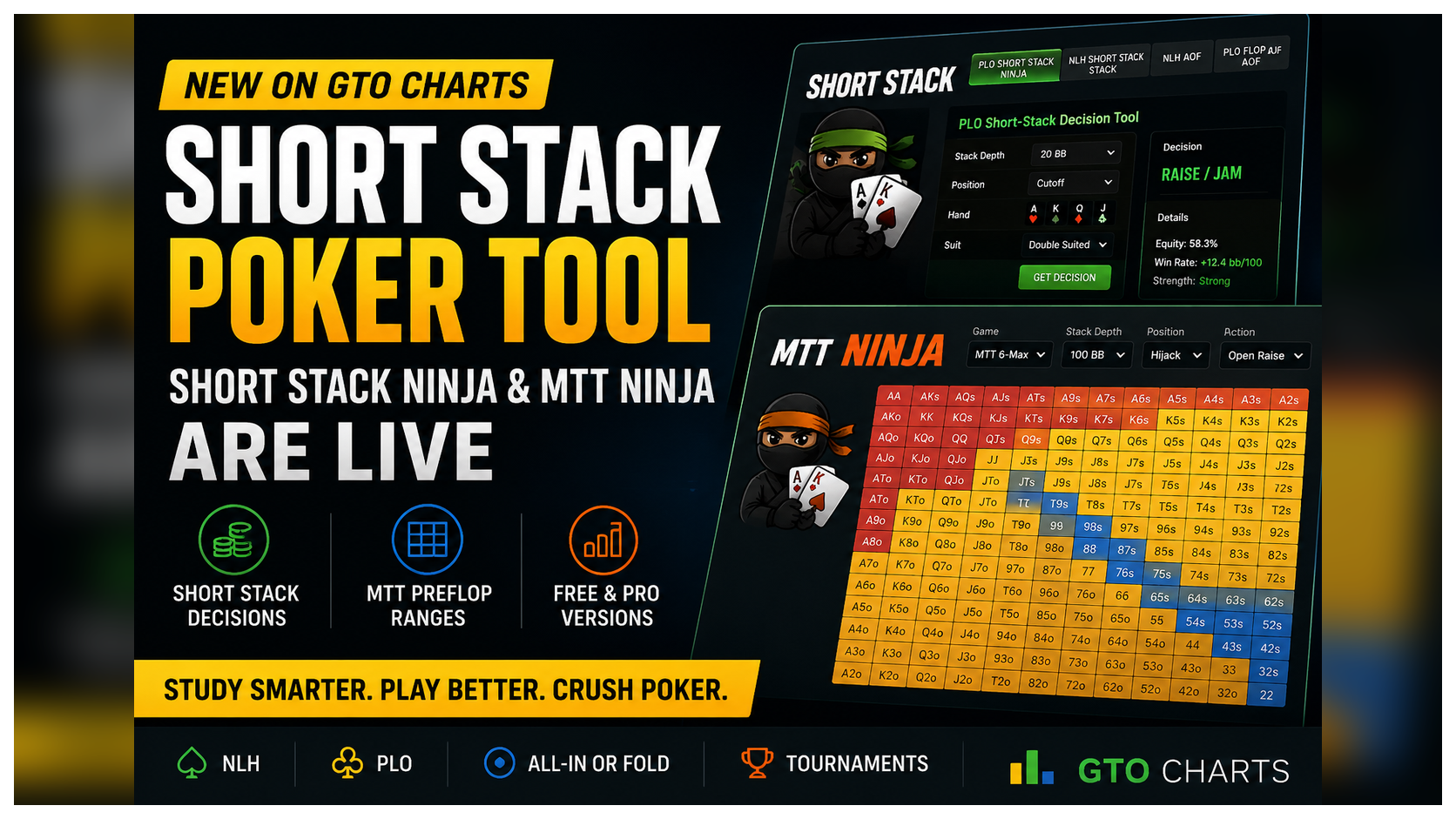
New Short Stack Poker Tool: Short Stack Ninja
Most poker players know they should study more. The real problem is not motivation. It is friction. Too many tools make simple spots feel complicated. Too many study sessions turn into random clicking, half-remembered notes, and vague feelings about whether a hand was “probably fine.” That is why we built two new tools for GTO Charts:

How to Track Your GTO Performance in Flophero
Most Pot Limit Omaha players review hands the wrong way. They open the biggest pots, relive the pain, decide whether they were unlucky, and move on. But that is not real performance tracking. That is emotional damage control. Real GTO performance tracking means reviewing your entire session, comparing your decisions against optimal strategy, measuring how much EV your mistakes cost, and identifying the leaks that repeat across hands.
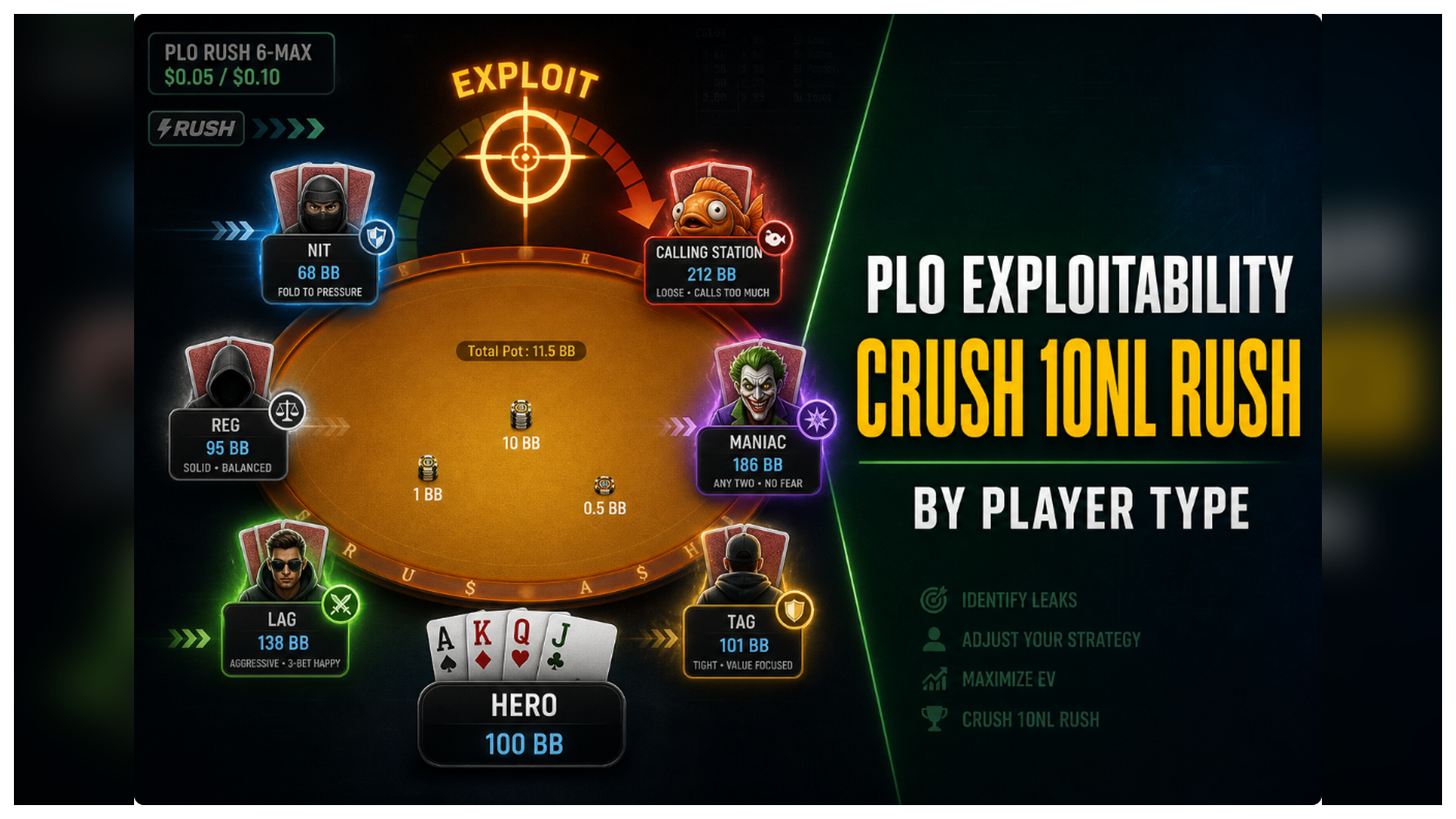
PLO Exploitability Masterclass: How to Crush 10NL Rush 6-Max by Player Type
Most players grinding 10NL Pot-Limit Omaha on GGPoker Rush 6-Max are still trying to solve the game. They're running sims, studying equilibrium play, and obsessing over solver outputs — while sitting in pools that are frankly not close to GTO. At this level, exploitability is not a weakness in your game. It is your edge. The players you face every day are not random noise. They fall into recognisable, repeatable patterns. A calling station [...]

Mastering In-Position C-Bets in PLO
C-betting — or continuation betting — is one of the most important weapons in a Pot-Limit Omaha player’s arsenal. When you're the preflop raiser and have position, the ability to apply pressure postflop with a well-timed c-bet can generate fold equity, build pots with strong hands, and help deny equity to your opponent’s range. But unlike in No-Limit Hold’em, where ranges are narrower and equities are more polarized, PLO demands a much more selective and [...]
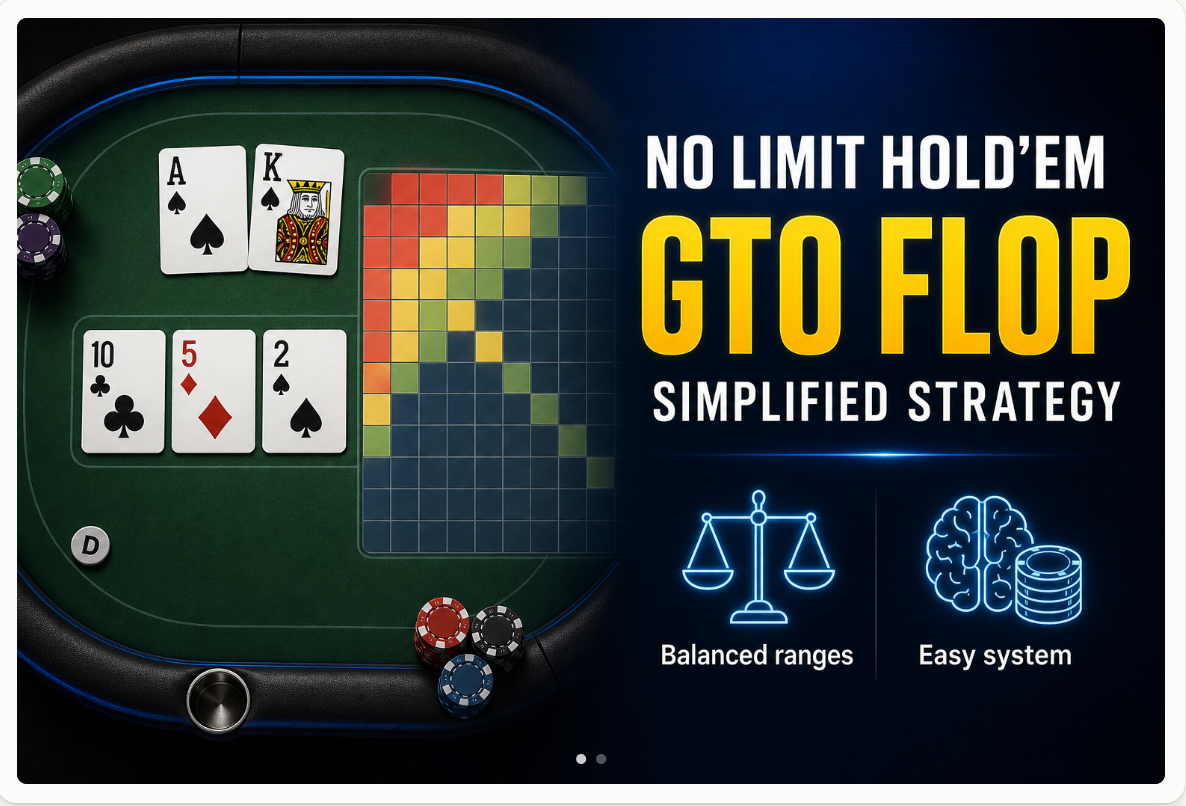
No Limit Holdem – Simplified GTO Flop Strategy
A simplified GTO (Game Theory Optimal) flop strategy can drastically improve your poker game by giving you a strong, balanced foundation that keeps your opponents guessing and prevents them from exploiting you. Here’s how adopting this approach will help you immensely: Here's a simplified GTO flop strategy that you can use to make quick and effective decisions without running a solver every time. It covers different board textures, betting sizes, and position considerations. GTO [...]
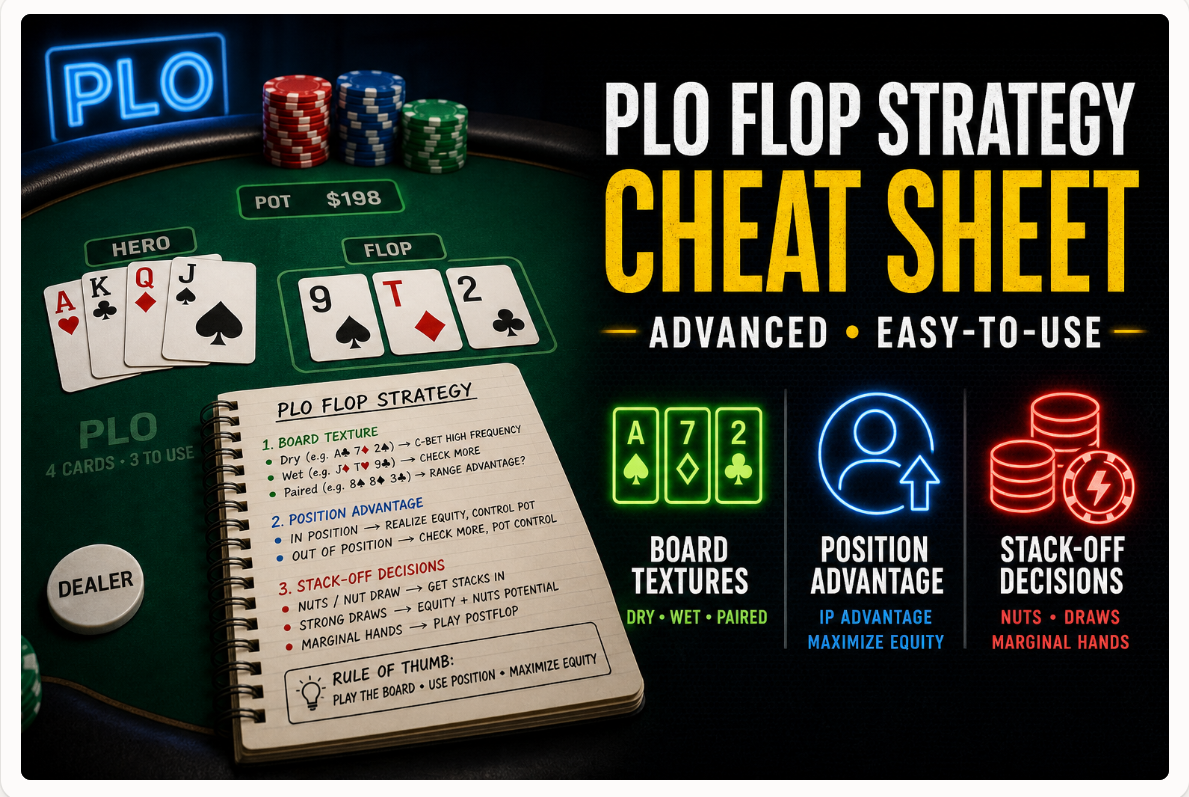
PLO Flop Strategy Cheat Sheet – Advanced but Easy-to-Use
PLO Flop Strategy is one of the most important parts of Pot Limit Omaha. Unlike No Limit Hold'em, you're rarely flopping a made hand — so knowing how to play different board textures, in position or out, is what separates the crushers from the fish. This PLO Flop Strategy Cheat Sheet breaks down all major board types. Your PLO flop strategy should change drastically in multiway pots… Key Concepts (Expanded) Nut-Equity Over Raw [...]