
PLO Short-Stack Strategy
PLO Short-Stack Strategy
Learn a practical PLO short stack strategy for 20bb, 30bb, and 40bb play, including buy-in size, table selection, seat selection, hand choice, and when to leave.
Table of Contents
Why Short-Stack PLO Works
Short-stacking PLO is not about playing scared. It is about using stack depth to force simpler, higher-pressure decisions.
Pot-Limit Omaha creates many close-equity spots. Players overvalue pretty hands, dominated flush draws, weak wraps, bad aces, and disconnected pairs. A short-stack strategy reduces difficult turn and river decisions while forcing opponents to make expensive mistakes before they fully understand their equity.
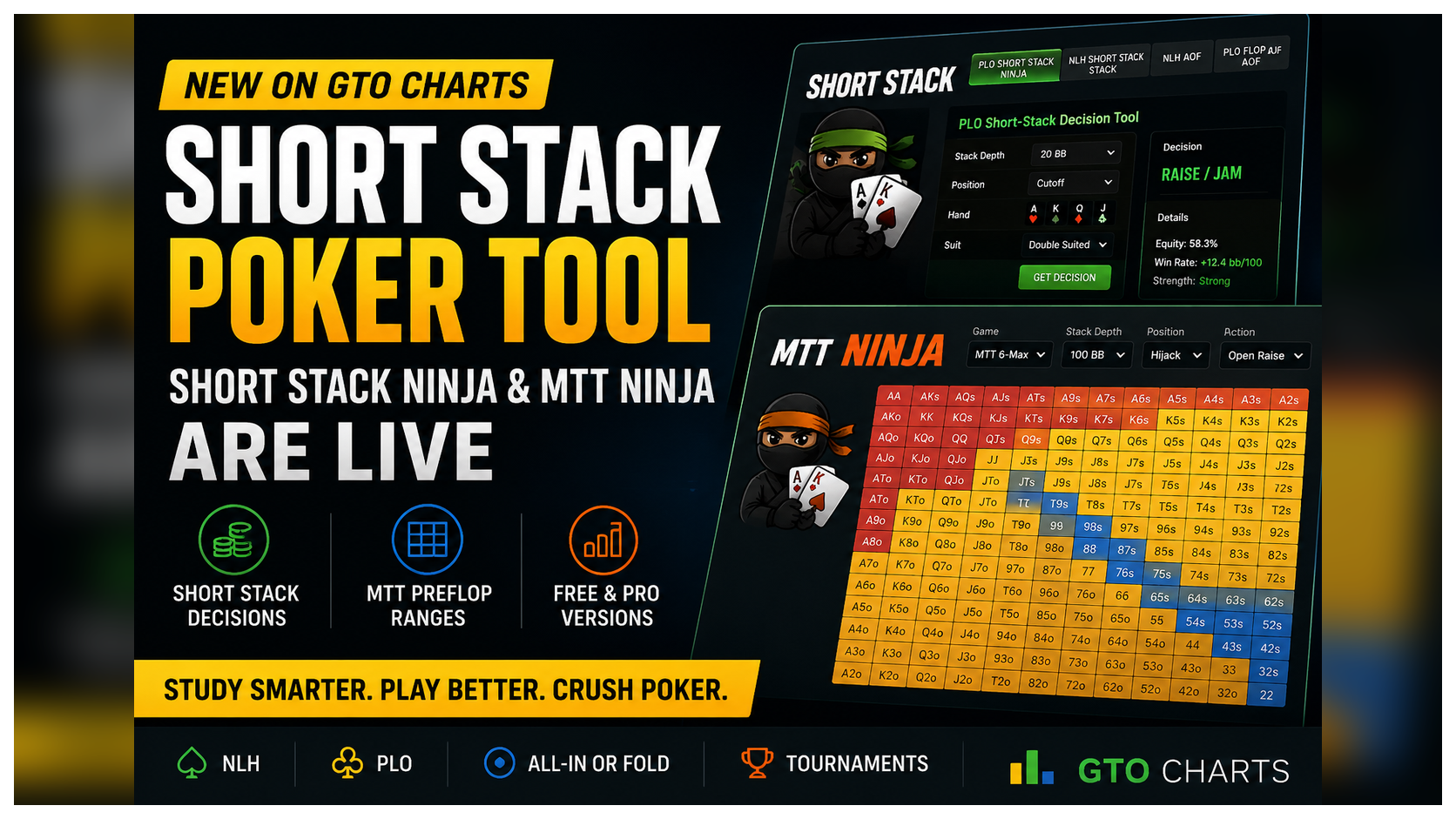
The goal of the PLO Short-Stack Decision Tool is to help you stop guessing. Instead of asking, “Does this hand look playable?” you filter by stack depth, position, suitedness, connectivity, pair quality, and opponent type.
Main idea: short-stack PLO is strongest when you enter pots with hands that can commit profitably at low SPR.
How Many BB Should You Buy In For?
The best default short-stack buy-in for PLO is usually 30bb. It gives you enough depth to create fold equity, but not so much depth that you are forced into complex river decisions.
20bb
Best for simple all in decisions, high-rake games, wild games, or newer short-stack players.
You should play tight, aggressive, and avoid speculative hands.
30bb
The best default stack size for most players.
You can 3bet, c-bet, jam profitable flops, and still avoid most deep-stack problems.
40bb
Better when the table is soft and you have position on weak deep stacks.
Requires stronger postflop skill because more turn decisions appear.
Best Default Rule
Buy in for 30bb. Use 20bb when the game is wild or you want the simplest strategy. Use 40bb only when you have a clear edge and good position.
When Should You Leave The Game?
The biggest short-stack leak is doubling up and then accidentally playing a bad deep-stack strategy.
If your plan is to short-stack, you need an exit rule before the session starts. When your stack grows too large, your studied 20bb or 30bb decisions no longer apply.
Leave or reset when:
- You buy in for 30bb and reach around 70bb.
- The main recreational player leaves.
- Strong aggressive players have direct position on you.
- The table becomes full of tight short-stack regulars.
- You are no longer playing the stack depth you studied.
Stay when:
- You have position on deep recreational players.
- Players are calling too wide preflop.
- Opponents overplay weak flush draws, bad wraps, and dominated aces.
- You are still comfortable with the effective stack depth.
Simple exit rule: if you buy in for 30bb, leave or reset around 70bb unless the table is clearly excellent.
Rush & Cash or Normal Tables?
Both formats can be profitable, but they reward different skills.
| Format | Best For | Main Advantage | Main Problem |
|---|---|---|---|
| Rush & Cash / Fast Fold | Volume, discipline, quick hand filtering | You see more hands per hour and avoid boredom punts. | You cannot seat select as well. |
| Normal Tables | Table selection and seat selection | You can sit in position on weak deep stacks. | You play fewer hands and must wait patiently. |
For pure EV, normal tables are usually better if you table select well. For volume and simplicity, Rush & Cash can be better.
Best Strategy
Use Rush & Cash to train discipline and get volume. Use normal tables when you can find weak players, choose your seat, and get position on deep stacks.
Do You Want Deep Stacks or Short Stacks At The Table?
You generally want deep bad players and short tight players.
Deep recreational players make bigger mistakes. They call too much, chase dominated draws, and stack off too lightly. That is exactly what you want when you are entering pots with strong short-stack hands.
A table full of short-stack regulars is not ideal. Your edge shrinks because everyone is playing similar stack-depth poker.
Best Table
One or two deep recreational players, passive blinds, and not many aggressive regulars behind you.
Okay Table
Some loose callers, a few regulars, and enough weak spots to justify staying.
Bad Table
Mostly solid regulars, several short stacks, and aggressive players with position on you.
Where Should You Sit?
Your best seat is to the left of the weakest deep stack. That means they act before you, and you act after them.
Position matters even when you are short. It lets you isolate weaker players, control pot size, realize equity better, and avoid being squeezed by aggressive players behind you.
Ideal seat:
- Deep recreational player on your right.
- Tight or passive players on your left.
- No strong LAG directly behind you.
- Blinds that overfold or call too wide.
Bad seat:
- Strong aggressive player on your left.
- Deep skilled player with position on you.
- Recreational player on your left instead of your right.
- Multiple players behind you who 3bet aggressively.
Seat rule: sit with position on the weakest deep stack whenever possible.
Preflop Hand Selection For Short-Stack PLO
Short-stack PLO is not about seeing cheap flops with pretty hands. It is about entering pots with hands that can stack off profitably.
Hands you want:
- Strong AAxx with suits or connectivity.
- Big double-suited Broadway hands.
- High-card rundowns.
- Connected double-suited hands.
- Strong pairs with good side cards.
Hands to avoid:
- Disconnected AAxx with no suits.
- Weak single-suited low rundowns.
- Bad pairs with no connectivity.
- Hands with dangling side cards.
- Non-nut flush draw hands that get dominated.
3Betting Strategy
Short-stack 3betting is powerful because it lowers the stack-to-pot ratio and punishes opponents who open too wide.
Your best 3bets are hands that dominate loose opens or realize equity well when called.
| Opponent | Adjustment | Strategy |
|---|---|---|
| Loose opener | 3bet wider for value | Use strong AAxx, Broadway ds hands, and connected high-card hands. |
| Tight opener | 3bet tighter | Respect their range and avoid weak aces or bad kings. |
| Maniac | Trap more, punt less | Let them overplay weak equity while you commit stronger hands. |
Flop Commitment: When To Stack Off
Short-stack PLO is won or lost in flop commitment spots. You do not need the nuts every time, but you do need enough equity against the range that continues.
Good stack-off hands:
- Top set.
- Overpair plus nut flush draw.
- Pair plus wrap plus flush draw.
- Nut wrap with backup equity.
- Strong two pair with redraws.
Dangerous stack-off hands:
- Bare overpair.
- Bottom two pair with no redraw.
- Non-nut flush draw.
- Weak wrap with dominated cards.
- Small set on extremely wet boards.
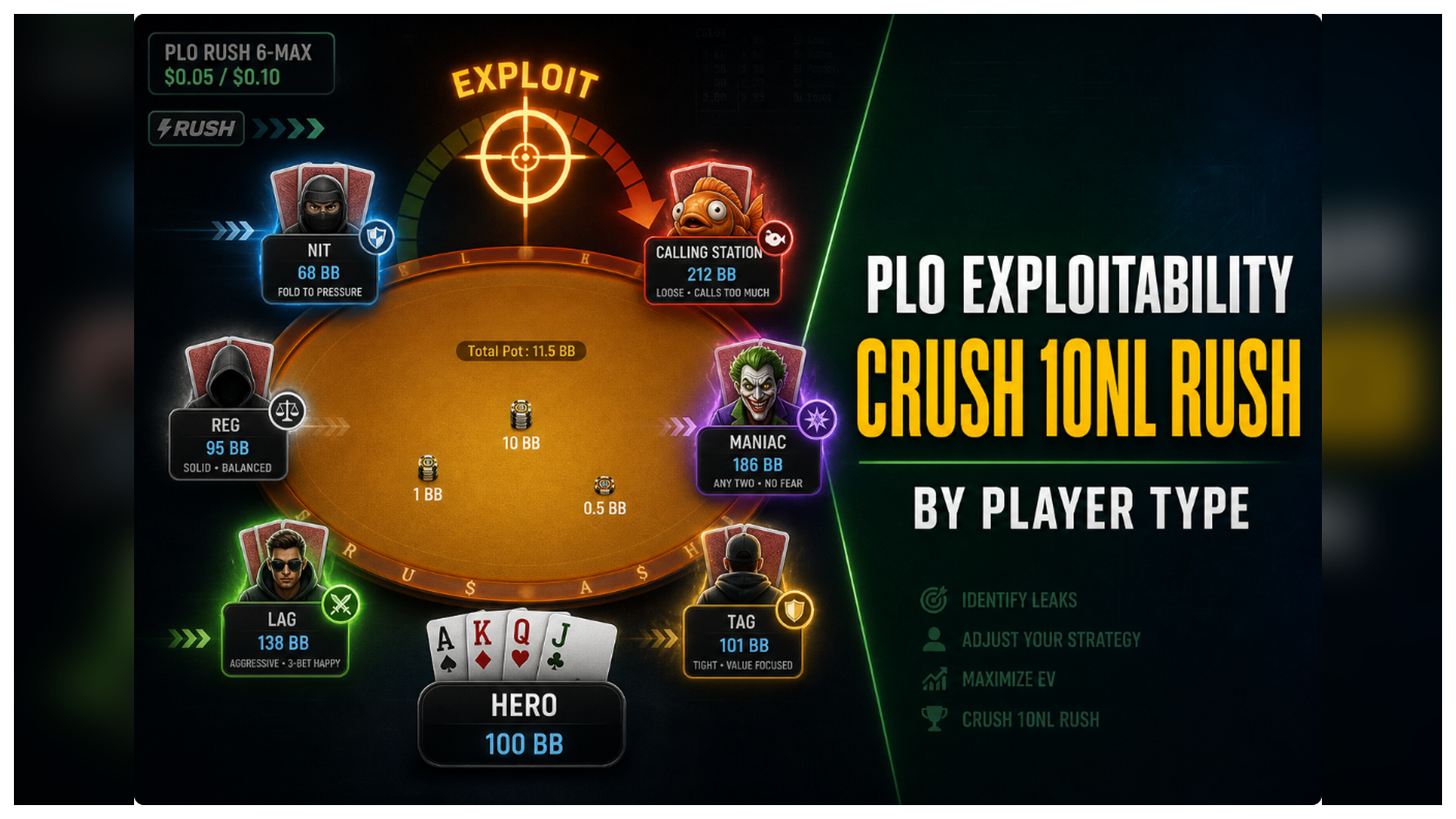
Adjustments By Opponent Type
Nit
Steal more, but stack off tighter when they show real resistance.
Calling Station
Value bet hard. Bluff less. Punish wide calls with stronger equity.
LAG
Tighten when out of position. 3bet and commit hands that dominate their aggression.
Solid TAG
Do not ego battle. Play clean ranges and focus on weaker players.
Maniac
Let them build the pot. Avoid marginal hands and stack off stronger.
Weak Regular
Attack predictable leaks: overfolding blinds, bad c-bets, and weak stack-offs.
Quick Winning Rules
- Buy in for 30bb by default.
- Leave or reset around 70bb unless the table is excellent.
- Prefer normal tables when you can seat select well.
- Use Rush & Cash for volume and discipline.
- Sit to the left of deep recreational players.
- Avoid strong aggressive players on your left.
- Prioritize nut potential, suits, connectivity, and strong pair structure.
- Do not overplay weak AAxx.
- Do not stack off bare overpairs on bad boards.
- Use Short Stack Ninja to drill uncertain spots before and after sessions.
Final Thoughts
The winning short-stack PLO strategy is simple, but not easy.
Buy in for the right stack size. Choose the right table. Sit in the right seat. Play hands that perform well at low SPR. Avoid dominated draws. Stack off with equity, not hope. Leave when you are no longer playing the strategy you studied.
The PLO Short-Stack Decision Tool inside Short Stack Ninja helps make those decisions faster, cleaner, and easier to repeat.
Ready To Try Short Stack Ninja?
Explore Short Stack Ninja Free or unlock the full Short Stack Ninja Pro version through GTO Charts.